


Business Success Begins with Smart Planning
Pittsburgh has always been a city of builders. And while the steel mills have long gone quiet, a different kind of industry has taken root. One driven by entrepreneurs turning ideas into income, often with little more than a laptop, a business plan and a willingness to show up at networking events on a Tuesday night.

For anyone thinking about launching a business in Greater Pittsburgh, the good news is that a rich ecosystem of resources and mentors exists to help make it happen. However, it takes more than a good idea. With the right guidance, the most common mistakes are also the most avoidable.

Beth Caldwell, founder of Pittsburgh Professional Women and Leadership Academy for Women, has spent two decades coaching aspiring entrepreneurs through the early stages of building a business. Her first piece of advice runs counter to the conventional startup playbook.
“Decide what you’re going to sell, how you’re going to get paid, and get a client,” Caldwell said. “A lot of people build the product or service, and then they try to sell it, and nobody wants it.” This works best for service-based, home-based businesses or side hustles, Caldwell said. Her clients, mostly individuals offering consulting, coaching and other service-based businesses, often spend months creating services and products, only to find there is no market for them once they launch.
She recommends landing paying clients before spending money on a website, an LLC or an insurance policy—generating revenue before making significant investments. She also warns against seeking guidance from the wrong people. “Taking advice from people who haven’t succeeded in business is a huge mistake,” Caldwell said. “Take advice from people who have achieved what you want to achieve.”

For women specifically, Caldwell sees a recurring pattern. “The biggest problem is what women have in every area of their life today—worrying what other people think and trying to be a people-pleaser,” she said. That hesitation can stall a promising business before it gets going. She also notes that many women hesitate to take on meaningful debt, opting to put startup costs on credit cards instead. “You have to take a risk to be in business,” she said. One Pittsburgh-specific resource she recommends is Enterprise Bank, which focuses exclusively on small-business lending.
For structured guidance at no cost, SCORE—the national nonprofit that provides free mentoring to entrepreneurs—has a strong presence in the region. Russell Hearn, a local SCORE mentor, is direct about the stakes.

“Most startups fail, let’s just say it,” Hearn said. “And they fail for two reasons: lack of a plan and lack of capital.”
SCORE’s process starts with a fundamental question: What problem does your business solve? Mentors then help clients develop a business plan, assess their market and connect with what Hearn calls the three essential partners for any new business owner—a lawyer, an accountant and an insurance broker. “Those people are important, and they’re going to be with you for a long time,” he said.
Hearn recommends having at least six months of operating expenses in reserve before opening. “It’s common to lose money for the first six months while getting established,” he said. “If it costs $5,000 a month to operate, you’ll need $30,000 in the bank to draw from.” He also raises an option many overlook—buying an existing business. With baby boomer owners approaching retirement, opportunities are available across industries. “The success is almost guaranteed since you already have a location with an established customer base,” Hearn said.
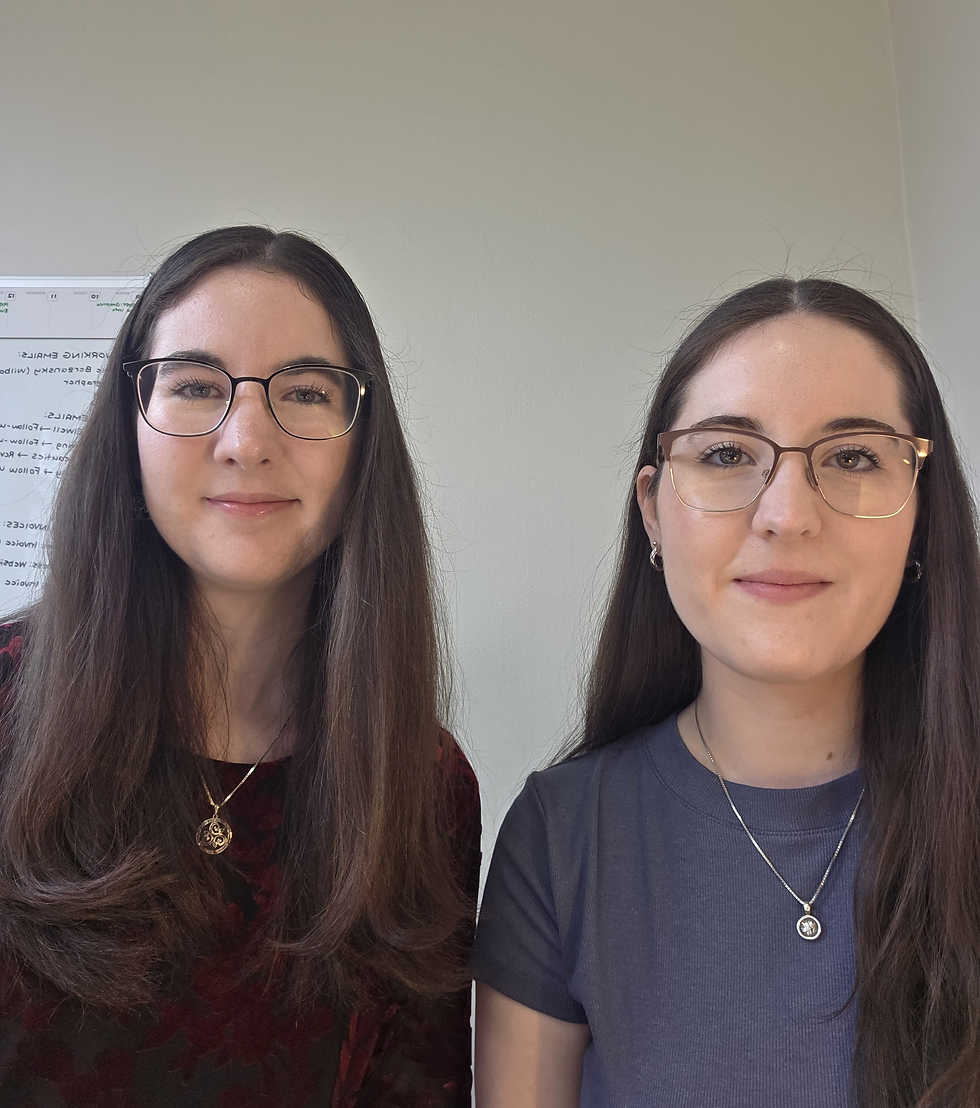
For Devon and Keira Geary, entrepreneurship in Pittsburgh came with an added layer of complexity. The sisters relocated from Sarasota, Florida to the city’s South Hills last October, months after launching Geary Media Group, a marketing firm offering graphic design, copywriting, website design, social media management and SEO services to small businesses.
“It was a little tricky figuring out who we should be marketing ourselves to and who we could help,” said Keira. Devon noted that pricing their services and building community connections were challenges as well.
The sisters turned to SCORE, as they had in Florida, and credited the mentoring with bringing structure to what had felt overwhelming. “Working with SCORE on our business plan was helpful because we had someone who knew what they were doing to guide us through it,” Keira said. Devon said they learned an important lesson about getting started. “Don’t put any money behind something unless you have a solid plan and a goal for the future of the business.”
Operating remotely with no office space has kept overhead low, and both sisters hold other jobs while reinvesting earnings into the business. Building visibility in a new city has meant committing to at least two networking events per month, sometimes driving up to an hour to attend. The payoff has been tangible—new clients, professional connections and intel on local resources and new tools. “You just don’t know about these things until they’re put out there at some of these events,” Devon said.

The sisters have also faced doubt. “We’ve had people question us because we’re young, and they assume we don’t know what we’re doing,” Devon said. Their response has been to keep moving. “Even if it gets overwhelming in the beginning, push through it, because it’ll be worth it,” Keira said.
Caldwell points to two Pittsburgh women as proof of what consistency and community focus can build. Shannon Thieroff, founder of Choice Chiropractic and later Choice Restorative Medicine, spent more than a decade among the top 10 chiropractors in the UPMC network. “All she did was serve the community,” Caldwell said. Mary Grace Musuneggi built Musuneggi Financial Group from scratch in the 1970s, growing through referrals until the firm was strong enough to acquire competitors during the 2007-2008 financial crisis.
The through line across every story is the same: plan carefully, find the right people to learn from, and get out into the community.
As Caldwell puts it, “Your network is your net worth.” In Pittsburgh, that network is closer than most people think


Really enjoyed reading through this discussion because the comments here feel real and easy to connect with. I recently started playing Geometry Dash again and still like how fun the obstacle levels and smooth gameplay feel online.